Nolea presents
The World of Wine
A wine school without the snobbery. You don't need to know a thing about wine. Curiosity is plenty.
Wine is a game of vocabulary and geography. Learn a few words and a few places, and every bottle starts talking to you.
After hundreds of tastings I can tell you the happiest part of this job: watching someone discover they had the palate all along.
A year of weather, in a glass
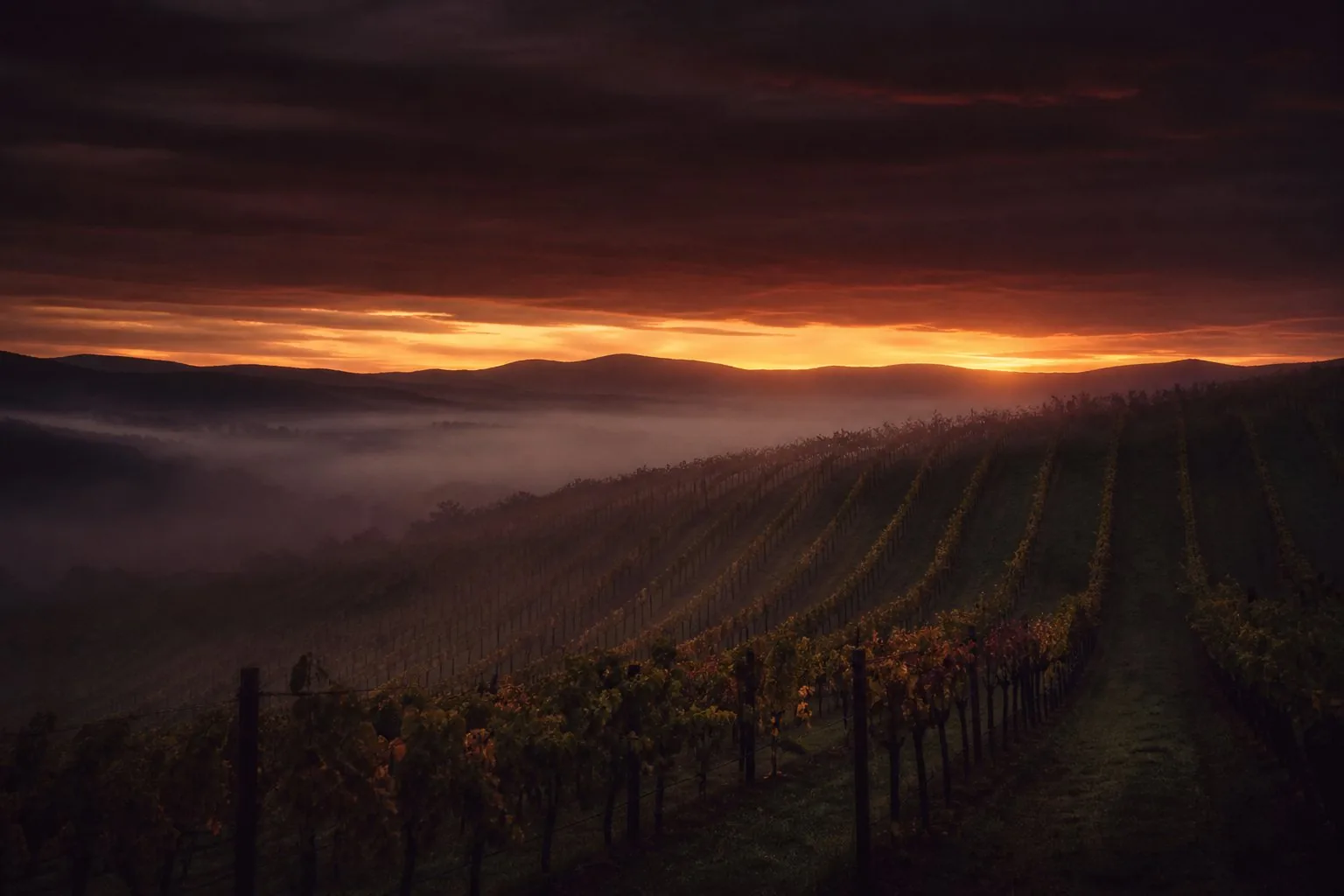
Wine is farmed weather. One bottle holds one summer on one hillside: the heat, the cold nights, the rain that almost ruined everything. Vines only fruit properly between 30 and 50 degrees of latitude: two belts around the planet, one per hemisphere.
Cool climate makes wine tart and nervy. Heat makes it ripe and jammy. That single trade explains more about what's in your glass than any tasting note ever will.
Chapter one · What wine actually isLook
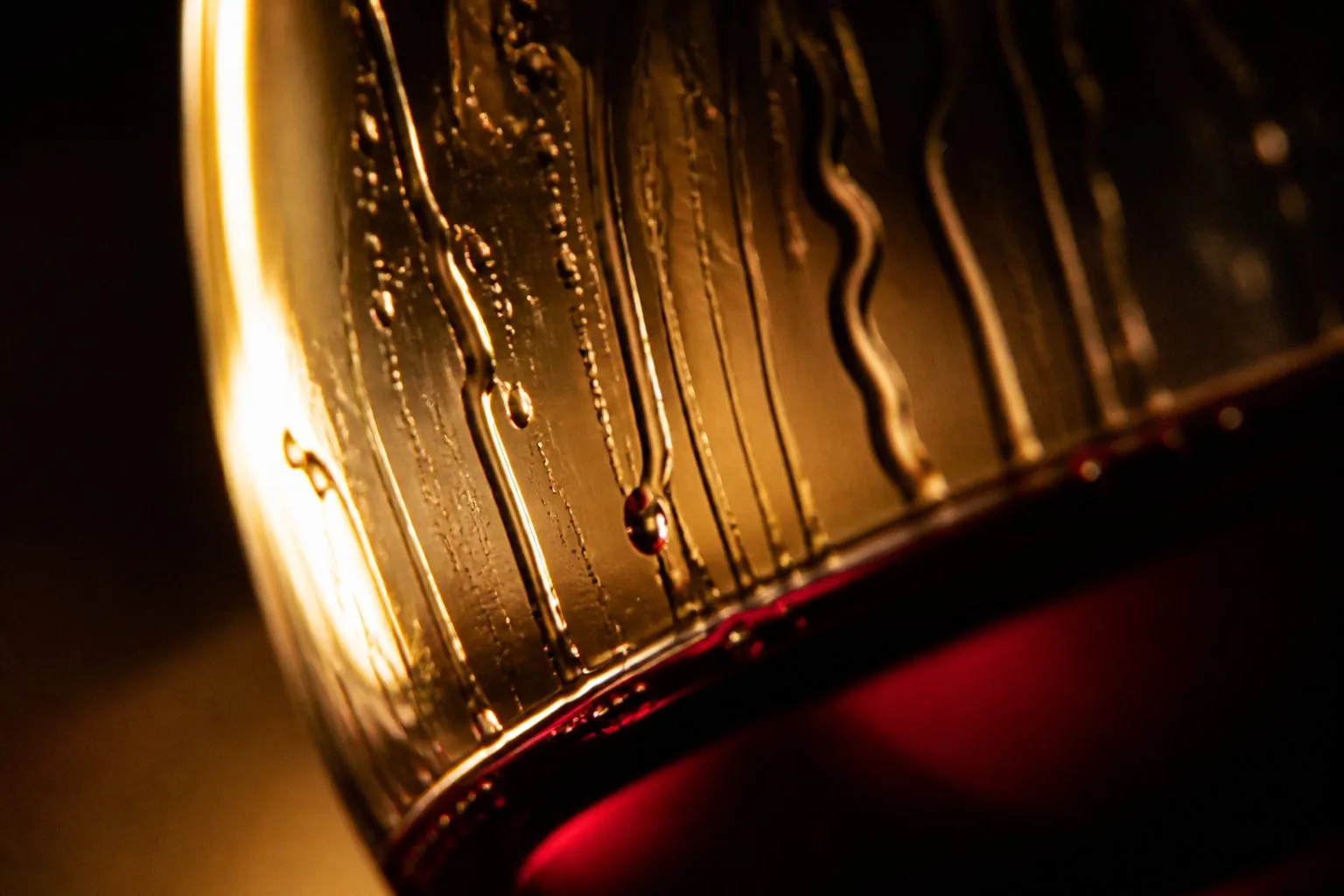
Tilt the glass against something white. Pale platinum means young and unoaked. Deep gold means oak, age, or late-picked grapes. And those thick “legs” running down the glass? They measure alcohol, not quality.
legs = physics, nothing more
Smell
Ninety percent of flavour lives here. Take short, gentle sniffs, like a dog, not a vacuum cleaner. Fruit aromas gather at the lower lip of the glass, florals at the top. One deep drag and your receptors give up for a while.
doggy sniffs. really.
Taste
One big sip to coat the mouth, then small ones. Sweetness lands first, right at the tip of the tongue. Acidity makes you salivate. Tannin dries your gums like over-steeped tea. Follow it: attack, mid-palate, finish.
a hole in the middle = a cheap wine
Conclude
Did it change in the glass? Did it last after you swallowed? A great wine keeps evolving for twenty seconds or more. Then rate it however you like. My own scale runs from “bleh” to “last meal on earth”.
“last meal on earth”
Your mouth already knows
Every wine balances six measurable things, and each one registers somewhere specific in your mouth. Poetry optional.
Six decisions made your wine
Every flavour in your glass traces back to a choice somebody made, or a risk the weather took for them. Six levers, roughly in order:
Cool climate keeps acid; heat builds sugar. And poor, rocky soil beats fertile ground: vines that struggle make concentrated fruit.
struggle = flavourThe blueprint. Cabernet Sauvignon is literally the child of Cabernet Franc and Sauvignon Blanc, so the bell-pepper streak runs in the family.
a family tree in every sipSugar in, alcohol out, aromas everywhere. The butter note in oaky Chardonnay is diacetyl (the same molecule that flavours popcorn).
popcorn. honestly.A second, quieter fermentation that turns sharp green-apple acid into cream. Nearly every red goes through it. Winemakers pick a side for whites.
apple → creamNew barrels lend vanilla, clove and coconut; used ones just let the wine breathe. A hundred-year-old oak tree yields two to four barrels.
100 years → 2 barrelsSlow oxygen chemistry: tannin softens, fruit turns toward leather, tobacco and earth. Only about five percent of wine improves past five years.
95% is for tonightNine styles. Every bottle on earth.
From the palest sparkling to the darkest fortified, every wine files somewhere along one line. Step through with the arrows and watch the light move.
Sparkling
Champagne, Cava, Prosecco, Lambrusco
Europe names places.
Everyone else names grapes.
That's the entire confusion, honestly. A French label tells you where; a Chilean label tells you what. Decode the translation once and every wine list opens up.
The Old World
The place is the label- ChablisisChardonnay
- SancerreisSauvignon Blanc
- Red BurgundyisPinot Noir
- BaroloisNebbiolo
- RiojaisTempranillo
- ChiantiisSangiovese
The New World
The grape is the labelSunnier, riper, and the grape sits right there on the front. Argentina grows Malbec at altitudes up to 3,000 metres. New Zealand rewrote Sauvignon Blanc. And Chile spent a whole century calling its Carmenère “Merlot” by mistake.
Same grapes, different weather, different names. The mirror-image of Europe, with sunscreen.
the smaller the region on the label, the more predictable the winePair the structure, not the grape
Match the weight of the dish, mind the acid and the tannin, and pair to the sauce rather than the meat. Six anchors that have never once failed me:
Seven chapters, no homework
- IWhat wine actually is
- IIHow to taste
- IIIThe six traits
- IVHow wine is made
- VThe style map
- VIThe world atlas
- VIILiving with wine